Wielding the Double-Edged Sword Called Social Media
The moment you look away, it takes control.
Why?
Quoting from this post,
[...] with 259 million new user identities starting to use social media since this time last year.
That equates to annualised growth of 4.87 percent, at an average rate of 7.8 new users every single second.
Calling the numbers alarming would be an understatement. Social media consumes the entirety of humanity as we speak, and there is no going back unless something catastrophic occurs. As much as I despise it, we are left with the sole option of coping with this new reality. Social media can and will degrade the average intellectual quality of the current and future generations while having physical side effects in addition, but disregarding social media as a whole is unfortunately not a wise choice. Hence, as things stand, only discipline can be our savior.
The Social Construct and the Influence of Social Media
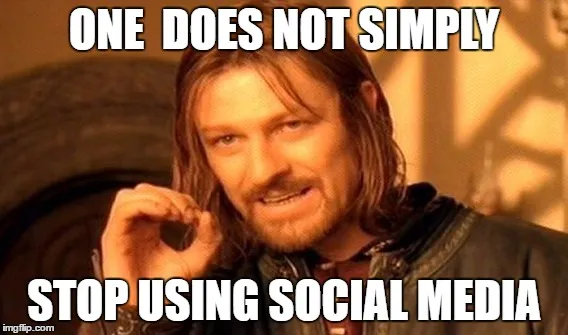
Everyone in today's sociaty is expected to have virtual presence, a.k.a. having one or more social media accounts. Well, what if you don't?
Let us say, A, B, C, and D are four imaginary people in a social circle who have come into contact through some event. They find out that they share the same interest but they do not know when is the next time they will find time to meet up again, so what do they do nine out of ten times? They Exchange social media accounts. Let us assume that out of the four people, C is the only one without a social media account. Without going into further imaginary details, it is safe to say from our own social experience that C is the most likely to slowly fall out of the group by a large margin. Meanwhile, A, B, and D will become friends.
However, do not mistake this for being something as small as a friendship over the internet. Person A could be a student, who later got connected to person E, who was the friend's friend of person D, and landed a job opportunity that changed person A's life. Perhaps person B found the love of their life through person A's circle... and so on. The point is made.
Meanwhile, person C disappears into oblivion, just because they thought social medias are dumb. Which they are, but so is society. And due to whatever curse, humans are social creatures.
The Illusion of Control
The illusion of control makes the helplessness seem more palatable. And when that illusion is taken away, I panic.
— Allie Brosh
It's common to mistake the app on your phone to be the product, when it's really you. What we see, what we do, and what we think in the virtual world is all meticulously controlled. Each and every user on Facebook is neatly profiled. They know who you are, where you live, and what you're doing this weekend, among other things. Ever noticed how they magically know that you're looking for a car to buy? The average reaction to this phenomenon is thanking the zucc for such convenience.
This proves the illusion to be a bigger threat than the lack of control. A lamb who knows not of the wolf is more at risk than a lamb who is aware of the threat.
The Exhibitionist
Ignorance is often overshadowed by the desire of attention. As absurd as it may sound, enough immersion can reduce one's world to the surface area of a digital display. When outside world ceases to exist, loneliness creeps under the skin.
Oversharing is a concerningly common act in social media, which is something adjacent to giving away your privacy in the form of digital footprints. If you asked "Why?", and if the indivitual was honest, they would surely answer: "Because it feels good."
Yes, that is the intended effect of the features: reacting, commenting, sharing, and so on. After all, when your world consists of a tiny ferris cat wheel, how can you possibly divert your attention to anything outside that wheel?
The Strategy of Passive Participation
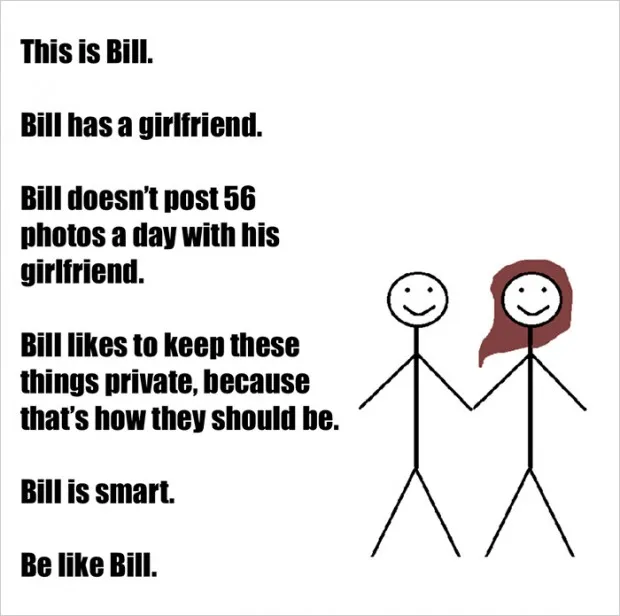
Presence does not necessarily require participation. The more you use the features, the deeper you sink into the ecosystem that consumes you whole. Social media platforms are intentionally designed to reward engagement. Being selective and conservative won't make you look flashy on the platform, but then again, that's not your world, is it?
Passive participation consists of mostly being a silent observer. However, when you do engage, it is deliberate and purposeful. We do not want to win the game because the game isn't even worth playing.
There is a quiet power in being passive when appropriate. It makes you harder to manipulate and influence, and paradoxically, more valuable. Scarcity turns into abundance when there is clarity in intention.
// comments